Upcycled Louis Vuitton Bags: What Luxury Buyers Should Check Before Purchasing
An upcycled Louis Vuitton bag can be worth buying when the source material is authentic, the transformation is expertly executed, and the finished piece includes clear provenance. Luxury buyers should not judge these pieces by appearance alone. The key checks are authentication, craftsmanship, structure, documentation, non-affiliation transparency, and long-term care.

Upcycling has become part of a larger luxury conversation: how can heritage materials be preserved, reinterpreted, and carried forward instead of discarded? In fashion, circular thinking prioritizes keeping products and materials in use at their highest value. The Ellen MacArthur Foundation describes circular economy principles as eliminating waste and pollution, circulating products and materials, and regenerating nature. Its fashion work also emphasizes resale, rental, repair, and remaking as models that keep fashion and textiles in use.
But luxury upcycling needs a higher standard. A repurposed canvas panel or reworked vintage bag is not automatically collectible. The buyer must know what the original material was, how it was authenticated, who transformed it, and what proof follows the finished object.
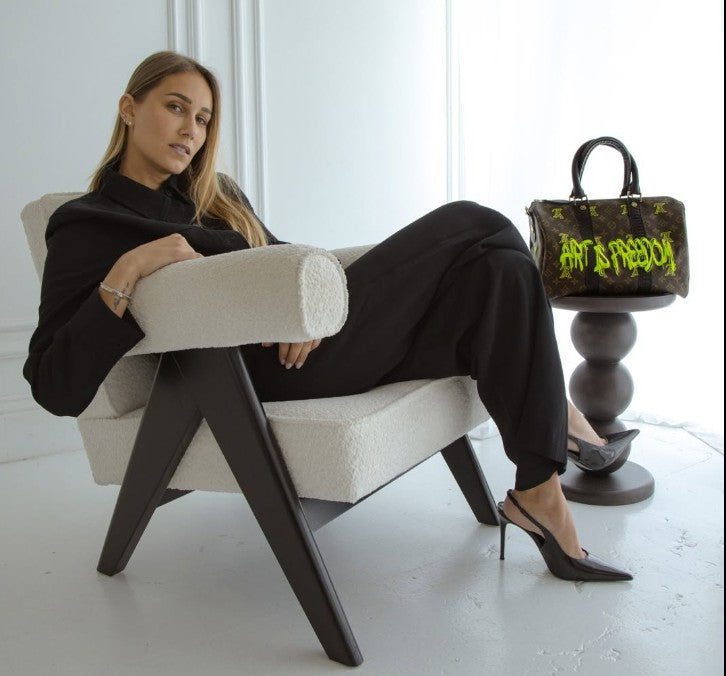
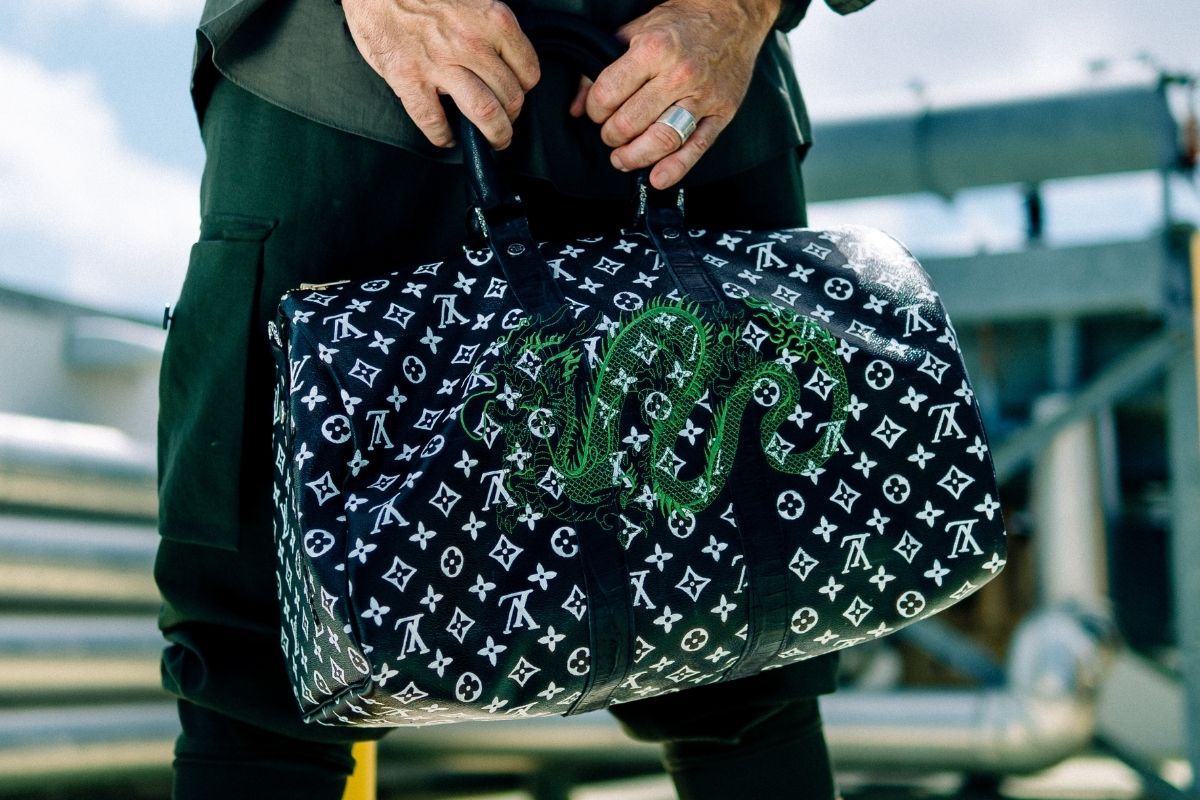
Philip Karto works within that higher standard. The atelier transforms authenticated vintage Louis Vuitton and Hermès bags into hand-painted, rebuilt, numbered, collectible art pieces. Explore authenticated vintage Louis Vuitton bags, including Philip Karto Speedy editions, Louis Vuitton Keepall art bags, and Neverfull statement totes.
What Is an Upcycled Louis Vuitton Bag?
An upcycled Louis Vuitton bag is a piece made from an existing Louis Vuitton item, vintage bag, or luxury material that has been altered, repaired, reconstructed, repurposed, or artistically transformed into a new object.
That definition sounds simple, but buyers need precision.
An upcycled Louis Vuitton bag may begin as:
- a complete vintage Louis Vuitton bag
- original Louis Vuitton canvas or leather material
- a damaged or aging item repaired and reworked
- a heritage object transformed into a new design
- a vintage foundation used for artistic intervention
The risk is that “upcycled” can be used too broadly. It may describe everything from careful atelier reconstruction to casual cutting, patching, and undocumented resale. That is why buyers should never rely on the word itself. They should ask what the source was, how it was verified, and whether the finished piece has credible provenance.
For buyers still deciding whether vintage luxury is the right foundation, Philip Karto’s guide on why buy vintage Louis Vuitton is a useful starting point.

Are Upcycled Louis Vuitton Bags Authentic?
An upcycled Louis Vuitton bag can include authentic Louis Vuitton material or begin from an authentic vintage Louis Vuitton foundation. But the finished object must be evaluated separately from an official Louis Vuitton product.
This distinction matters.
If the original foundation is genuine, the source material may be authentic. But once that item is cut, repainted, rebuilt, reconstructed, or transformed by an independent artist or atelier, the final work should not be presented as an official Louis Vuitton creation. It is an independently transformed object built from authenticated material.
Philip Karto is independent and is not affiliated with, endorsed by, or officially connected to Louis Vuitton. The atelier works with authenticated vintage luxury foundations acquired through the secondary market and transforms them under the Philip Karto name.
Louis Vuitton’s own personalization FAQ states that the brand offers a painting service only for hard-sided Monogram or Damier Canvas luggage and offers hot stamping for selected items. That official personalization context is separate from independent artist transformation or upcycling.
The serious buyer should separate three questions:
| Buyer Question | What It Actually Means |
|---|---|
| Is the source authentic? | Was the original Louis Vuitton item or material genuine? |
| Who transformed it? | Was the work done by a credible artist, atelier, or maker? |
| Is the final object documented? | Does the finished piece include provenance, numbering, certification, or traceability? |
A strong upcycled Louis Vuitton bag should answer all three.
Why Authentication Matters More With Upcycled LV Pieces
Authentication is important for any vintage Louis Vuitton purchase. It becomes even more important when the piece has been upcycled, reworked, or reconstructed.
Why? Because transformation can make inspection harder. Stitching may be replaced. Lining may be rebuilt. Hardware may be changed. Canvas may be cut or repurposed. A bag may no longer look exactly like the original model. That does not make it inauthentic, but it does mean buyers need clearer documentation.
A luxury buyer should never accept “made from Louis Vuitton” as proof. They should ask how the source material was authenticated and what evidence supports the finished piece.
Counterfeit risk is not theoretical. Entrupy’s 2026 State of the Fake Report identifies Louis Vuitton as the single largest counterfeit exposure in its data because of the brand’s high volume in authentication submissions. Fashionista’s coverage of the same report notes that Louis Vuitton accounted for 33.14% of all luxury submissions.
That does not mean every upcycled Louis Vuitton bag is risky. It means the burden of proof should be higher. Serious sellers should be transparent about origin, process, and non-affiliation.
For deeper buyer education, review Philip Karto’s guides to common Louis Vuitton fakes and Louis Vuitton date codes and microchips.
Buyer Checklist: What to Check Before Purchasing
Use this checklist before buying an upcycled Louis Vuitton bag, reworked Louis Vuitton bag, repurposed Louis Vuitton piece, or artist-transformed vintage bag.
| What to Check | Why It Matters | Buyer Question |
|---|---|---|
| Source authenticity | Confirms the LV foundation or material is genuine | Was the original item authenticated before transformation? |
| Seller transparency | Prevents confusion with official Louis Vuitton products | Is the seller clear that the piece is independently transformed? |
| Material origin | Shows whether the bag began as a full vintage item or loose material | What original item did the material come from? |
| Craftsmanship | Separates luxury-grade work from casual alteration | Are stitching, edges, lining, hardware, and structure refined? |
| Structural integrity | Protects long-term use | Was the bag reinforced or only cosmetically altered? |
| Condition before transformation | Reveals how much restoration or repair was needed | What was the condition of the vintage foundation? |
| Documentation | Supports provenance and buyer confidence | Is there a certificate, number, PK plate, or registry? |
| Preserved components | Helps tell the original object’s story | Are original parts preserved or disclosed? |
| Care guidance | Protects the transformed object | Are cleaning and storage instructions provided? |
| Non-affiliation language | Avoids brand confusion | Does the seller clearly state independence from Louis Vuitton? |
Condition is especially important. An upcycled bag can look dramatic in photographs but still have weak piping, compromised corners, brittle canvas, poor edge finishing, or unstable structure. Use Philip Karto’s guide to vintage Louis Vuitton condition grades when comparing vintage foundations, and review the Louis Vuitton materials guide to understand Monogram canvas, Damier canvas, leather, and other material differences.
Upcycled vs Reworked vs Restored vs Hand-Painted Louis Vuitton Bags
Not every altered Louis Vuitton piece belongs in the same category. Buyers should understand the terms before comparing quality or price.
| Term | Meaning | Buyer Risk |
|---|---|---|
| Upcycled Louis Vuitton bag | Existing LV material or a vintage LV foundation is transformed into a new or improved object | Source material may be unclear without documentation |
| Reworked Louis Vuitton bag | A bag or material has been altered, reshaped, or reconstructed | Quality varies widely by maker |
| Repurposed Louis Vuitton bag | LV material is used for another function or product | Can feel less collectible if provenance is weak |
| Restored Louis Vuitton bag | Original condition is improved through repair | Repair quality and disclosure matter |
| Hand-painted Louis Vuitton bag | Artwork is added to an existing LV foundation | Must verify base authenticity and artist authorship |
| Philip Karto transformation | Authenticated vintage foundation is selected, inspected, dismantled, restored where needed, artistically transformed, rebuilt, and documented | Should be evaluated through authentication, craftsmanship, authorship, and provenance |
This distinction protects buyers from weak comparisons. A casual reworked accessory, an undocumented repurposed canvas piece, and a numbered Philip Karto art bag are not the same kind of object.
Philip Karto’s work sits in the atelier-transformed category. The original heritage foundation matters, but the final value also depends on authorship, execution, and traceability.

Why Provenance Matters in Upcycled Luxury
Provenance is the evidence trail behind a luxury object. For an upcycled Louis Vuitton bag, provenance explains the original source, authentication, transformation process, artist authorship, and documentation attached to the final piece.
Provenance is the line between a collectible object and a decorated secondhand bag.
Without provenance, a buyer is left with surface claims:
- “made from Louis Vuitton”
- “reworked designer bag”
- “custom LV”
- “repurposed luxury canvas”
- “vintage-inspired”
Those phrases may sound attractive, but they do not answer the real buyer questions about source, authentication, authorship, and proof.
The Authentication & Provenance page states that every Philip Karto piece begins with an original vintage luxury bag, sourced through established secondary-market specialists in authenticated heritage pieces, with physical inspection and verification before entering the atelier.
That is the standard luxury buyers should look for: not just an attractive object, but a defensible record.
How Much Do Upcycled Louis Vuitton Bags Cost?
Pricing for an upcycled or artist-transformed Louis Vuitton bag reflects more than the original bag. It accounts for the authenticated vintage foundation, the hours of atelier reconstruction, hand-painted artwork, custom hardware, and the documentation that follows the finished piece. Because each Philip Karto work is individually transformed and numbered, pricing varies by silhouette, complexity, and whether the piece is an existing edition or a one-of-one commission. Speedy editions typically start at [PRICE], with Keepall art bags and one-of-one commissions priced higher based on scale and detail. For current availability and pricing, explore the Louis Vuitton collection or request a commission.
Can Upcycled Louis Vuitton Bags Hold Value?
An upcycled Louis Vuitton bag can hold value when the source material is authentic, the craftsmanship is strong, the design has collector appeal, and the provenance is clear. But no seller should guarantee investment returns or guaranteed resale value.
The resale market rewards trust, demand, condition, rarity, and documentation. It also changes over time. A standard vintage Louis Vuitton bag may appeal to one resale buyer. A one-of-one Louis Vuitton art bag may appeal to a different buyer who values authorship and individuality.
Luxury buyers are increasingly thinking about future value. The RealReal’s 2025 Resale Report states that 47% of consumers consider resale value before buying new luxury goods. The same report noted resale value gains for classic accessories, including Louis Vuitton Speedy bags and Hermès Birkin 30.
For upcycled or artist-transformed pieces, the value conversation is more layered. Buyers should evaluate:
- authenticity of source material
- condition of the vintage foundation
- quality of reconstruction
- artistic identity
- rarity
- documentation
- brand and atelier credibility
- long-term care requirements
For broader context, read Philip Karto’s guide to Louis Vuitton resale value.
Why Philip Karto’s Approach Is Different
Philip Karto’s approach is different because the atelier does not treat vintage luxury material as disposable decoration. It treats the original object as a heritage foundation.
The Philip Karto Atelier works with authentic vintage pieces sourced from the secondary market, primarily bags originally crafted by Louis Vuitton and Hermès. The atelier describes a process that includes careful dismantling, examination, restoration where necessary, hand-painted elements, embroidery, couture-level stitching, specially designed metal components, and rebuilding within the atelier.
That process matters because an upcycled luxury piece is only as strong as its weakest layer. If the material is authentic but the reconstruction is poor, the result is weak. If the artwork is beautiful but the origin is undocumented, buyer confidence falls. If the piece is visually striking but structurally unstable, it may not hold up to use.
Philip Karto’s difference rests on several layers:
- authenticated vintage foundation
- physical inspection before transformation
- deliberate atelier reconstruction
- hand-painted artwork
- preserved original components where relevant
- PK identity
- numbering and traceability
- independent artist positioning
- collector-focused presentation
The finished object is not positioned as an ordinary resale. It is not positioned as official Louis Vuitton customization. It is a Philip Karto artwork built from an authenticated vintage luxury foundation.
To understand the process, visit The Philip Karto Atelier. To understand buyer proof, review Authentication & Provenance.

How to Choose the Right Upcycled Louis Vuitton Bag
The right upcycled Louis Vuitton bag depends on how the buyer wants to use it: daily wear, travel, display, collecting, gifting, or private commissioning.
Choose a Speedy if you want an iconic daily silhouette

The Speedy is compact, recognizable, and expressive. A Philip Karto Speedy edition works well for buyers who want a vintage Louis Vuitton art bag that can still feel wearable and personal.
Best for:
- daily styling
- first collector piece
- compact statement
- gifting
- recognizable heritage form
Choose a Keepall if you want scale and travel presence

The Keepall offers more surface area, more physical presence, and a stronger travel identity. A Louis Vuitton Keepall art bag is ideal when the artwork needs room to breathe.
Best for:
- travel
- large-scale artwork
- collector display
- high-impact styling
- strong visual presence
If you are comparing these two silhouettes, review Philip Karto’s Louis Vuitton Speedy and Keepall size guide.
Choose a Neverfull if you want utility and statement

The Neverfull is practical, open, and easy to style. A Louis Vuitton Neverfull statement tote is a strong choice for buyers who want useful space with visual individuality.
Best for:
- everyday carry
- tote lovers
- practical styling
- statement utility
- expressive collecting
Choose a one-of-one commission if you want personal direction
Some buyers want more than available inventory. A One-of-One Commission allows the collector to explore a more personal direction with the atelier.
This is the right route when the buyer wants a piece that reflects a specific mood, visual language, or collector intention.
Care and Maintenance for Upcycled Louis Vuitton Bags
An upcycled Louis Vuitton bag should be cared for as a transformed vintage object, not as a new factory-standard product. Paint, restored leather, rebuilt structure, vintage canvas, hardware, lining, and stitching all require thoughtful handling.
General care principles include:
- avoid prolonged direct sunlight
- avoid heavy moisture and humidity
- do not use harsh cleaners
- do not scrub painted surfaces
- store the bag in a dry, protected space
- avoid overloading vintage structures
- keep documentation and original components safe
- follow atelier-specific care guidance
For care details, visit Philip Karto’s Care & Maintenance page before cleaning, storing, or traveling with a transformed vintage bag.
Related Reading
Before buying or comparing an upcycled Louis Vuitton bag, these Philip Karto guides can help:
- Why Buy Vintage Louis Vuitton?
- The Most Common Louis Vuitton Fakes in 2026
- Louis Vuitton Date Codes vs Microchips
- Vintage LV Condition Grades Explained
- Louis Vuitton Materials: Monogram vs Damier vs Leather
- Do Louis Vuitton Bags Have Resale Value?
- Louis Vuitton Speedy + Keepall Size Guide
Final Thoughts
An upcycled Louis Vuitton bag should not be judged by novelty alone. Luxury buyers should ask harder questions: What is the source? Was it authenticated? Who transformed it? How well was it rebuilt? What documentation follows the final piece?
The strongest upcycled luxury pieces are not simply repurposed. They are authenticated, thoughtfully transformed, structurally considered, and traceable.
Philip Karto transforms authenticated vintage Louis Vuitton bags into hand-painted, rebuilt, numbered collectible art pieces for buyers who value heritage, authorship, and provenance. Explore Philip Karto’s authenticated vintage Louis Vuitton art bags, browse Speedy editions, view Keepall art bags, or request a one-of-one commission.