Article: Which Designer Bags Hold Their Value Best?

Which Designer Bags Hold Their Value Best?
Selected Hermès Birkin and Kelly bags show some of the strongest secondary-market demand among the models discussed in this guide, particularly desirable configurations in excellent condition. Certain Chanel Classic Flaps and documented Louis Vuitton artist collaborations can also attract strong collector interest.
The brand name alone, however, does not determine resale value. Model, size, material, color, hardware, production period, condition, documentation, purchase price and the eventual selling channel can all affect the result.
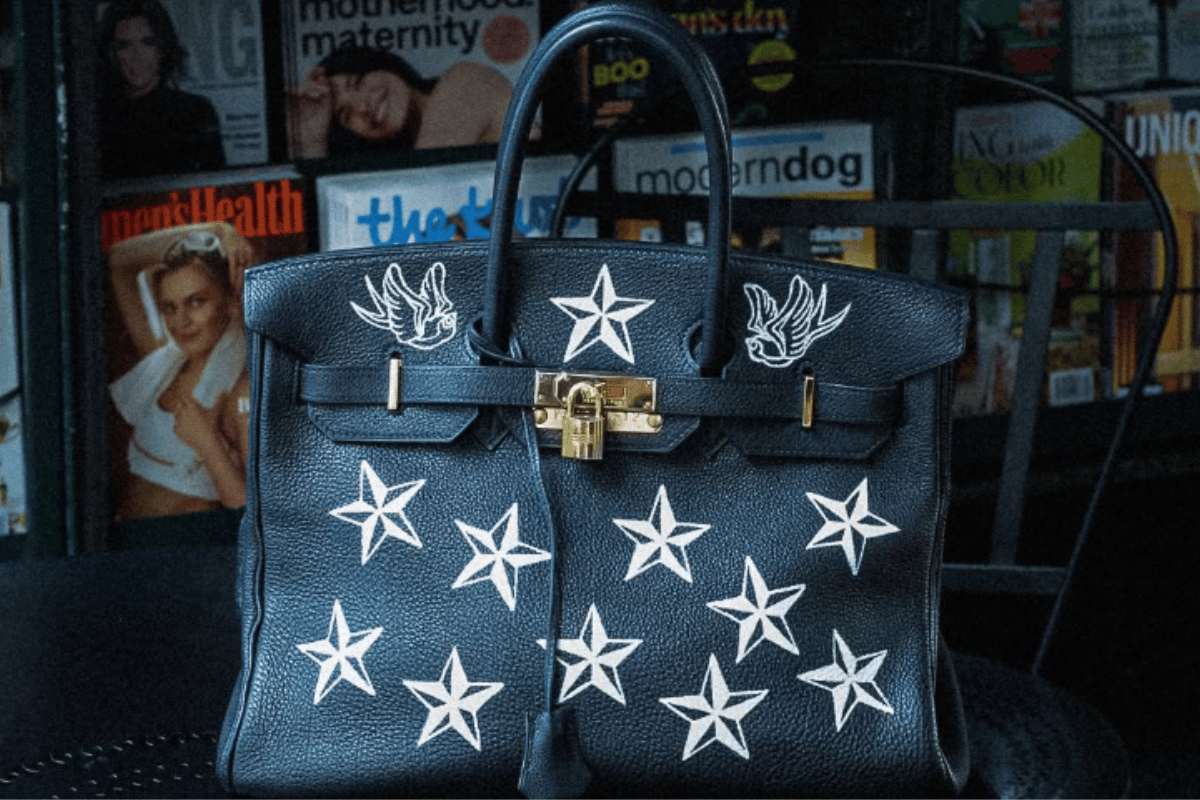
At Philip Karto, these distinctions are particularly relevant because each work begins with a selected pre-owned luxury bag before undergoing an independent artistic transformation in the Philip Karto atelier in Miami. Understanding the history and specification of the original object is therefore an important part of documenting the finished work.

This guide considers completed auction results and published auction-house market observations. Advertised asking prices, Buy Now listings and increases in boutique retail prices should not be treated as evidence that an individual bag has achieved the same resale value. For a closer look at completed sales, condition reports and auction terminology, see our collector’s guide to handbags at auction.
Editorial note: Historical resale results and market observations are provided for general informational purposes only. They do not guarantee future value, appreciation, liquidity or profit and should not be considered investment, financial or appraisal advice.
Which designer bags have shown strong resale demand?
The strongest evidence in this comparison is associated with selected Hermès Birkin and Kelly configurations. Certain Chanel Classic Flaps and precisely documented Louis Vuitton artist collaborations also have established collector markets.
There is no universal result for an entire brand or model family. Two bags carrying the same house name can produce very different resale outcomes depending on their specifications, condition and market circumstances.
|
Bag or model |
What the available evidence suggests |
Important value factors |
What to keep in mind |
|
Selected Hermès Birkin 25 and Birkin 30 bags |
Strong secondary-market demand has been reported for desirable examples, particularly smaller configurations |
Size, leather, color, hardware, condition and date stamp |
Purchase price, wear and individual specification can materially affect resale |
|
Mini Kelly, Kelly 25 and Kelly 28 |
These configurations have been identified as highly sought-after or widely collected |
Size, construction, leather, color, hardware, condition and documentation |
Demand for one Kelly size should not automatically be applied to another |
|
Selected Chanel Classic Flaps |
Medium, Mini and some well-preserved vintage examples have established collector interest |
Size, leather, color, production period, hardware and condition |
A higher current retail price does not prove that a pre-owned example appreciated |
|
Documented Louis Vuitton artist collaborations |
Completed auction sales show demand for certain specific editions |
Artist, edition, model, condition, documentation and collector demand |
“Limited edition” by itself does not guarantee a premium or an easy resale |
These categories describe documented market patterns rather than a permanent ranking. Auction results can differ by date, location, currency, fees, condition and buyer participation.
Why does the exact bag matter more than the brand name?
The resale market values individual objects rather than logos in isolation.
A Birkin 25 in excellent condition is not a meaningful comparable for a heavily worn Birkin 40. In the same way, a vintage Chanel Classic Flap should be assessed according to its period, materials, hardware and condition rather than compared indiscriminately with every other Classic Flap.
Important factors can include:
-
exact model and size;
-
leather or other material;
-
color;
-
hardware;
-
production period;
-
condition;
-
repairs or alterations;
-
original accessories;
-
documentation and provenance;
-
depth of buyer demand.
Published Sotheby's market guidance cited in the original research identifies factors including condition, size, color, leather and date stamp as relevant considerations for Birkin and Kelly bags. Exceptional vintage or provenance-rich pieces may behave differently from ordinary examples.
Record-setting or historically important auction pieces. should therefore not be used as a proxy for the expected value of a typical handbag.
Which Hermès Birkin and Kelly bags attract strong demand?
Smaller Birkin and Kelly configurations in excellent condition have shown particularly strong collector interest, although size alone does not determine value.
Sotheby's market commentary referenced in the research underlying this article has highlighted demand for Birkin 25 bags and has identified the Mini Kelly 20 as especially coveted, with Kelly 25 and Kelly 28 also widely collected.
The most useful comparison considers the complete specification of a bag, including:
-
size;
-
leather;
-
color;
-
hardware;
-
construction;
-
condition;
-
date stamp;
-
accessories and documentation.
Togo and Epsom are among the leathers identified in Sotheby's market commentary as attracting buyer interest, while Sellier construction can be desirable in smaller Kelly formats.
Condition remains especially important. Corner wear, handle discoloration, hardware scratches, structural changes, repairs or missing accessories can make one example materially different from another.
Vintage pieces can also appeal to collectors because of their period, rarity, provenance or preserved condition. Age itself, however, does not create value.
For that reason, it is more accurate to say that selected Birkin and Kelly configurations have demonstrated strong resale demand than to assume that every Hermès handbag will perform in the same way.
Which Chanel Classic Flap bags retain collector interest?
Selected Medium and Mini Chanel Classic Flaps have established collector interest. Well-preserved vintage pieces from the 1980s and 1990s can also appeal to buyers interested in period-specific construction and hardware.
Sotheby's commentary cited in the original research identifies the Medium as a particularly popular size and the Mini as a configuration with significant demand. Certain preserved vintage black lambskin examples have also attracted attention for details associated with their production period, including gold-plated hardware.
Several factors still need to be considered individually:
Leather. Lambskin and caviar have different characteristics and should not automatically be treated as equivalent comparables.
Condition. Corners, quilting, structure, hardware, interior wear and any repairs can influence buyer interest.
Production period. Vintage construction and hardware can attract collectors, but age alone does not establish value.
Accessories and documentation. Supporting materials can help buyers understand and evaluate a particular example.
It is also important to distinguish retail pricing from resale performance. An increase in the boutique price of a new Chanel bag does not establish that a pre-owned bag has appreciated by the same amount.
A more useful reference is a completed resale involving a closely comparable bag.
Which Louis Vuitton bags can attract collector premiums?
For Louis Vuitton, the exact collaboration and edition can matter much more than the logo alone.
Documented artist collaborations involving names such as Stephen Sprouse, Takashi Murakami and Yayoi Kusamahave developed recognizable collector audiences. Nevertheless, each edition, model and condition should be evaluated individually.
The original research for this article includes two examples of completed Christie's auction results:
-
a limited-edition Stephen Sprouse Orange Graffiti Monogram Speedy 30 sold for €2,142 in an online sale on April 25, 2024;
-
a Yayoi Kusama painted-pumpkin Monogram OnTheGo sold for HK$60,480 in Hong Kong on May 25, 2024.
These figures illustrate demand for particular objects. They should not be interpreted as a direct comparison between the two bags, an estimate for another example, or evidence of investment profit.
The objects were different and were sold in different currencies, locations and market circumstances.
For collector-oriented Louis Vuitton pieces, relevant considerations include:
-
artist or collaborator;
-
exact collection and edition;
-
model;
-
condition;
-
provenance;
-
documentation;
-
scarcity;
-
depth of collector demand.
A product being described as a limited edition does not by itself establish future value or liquidity. For the wider distinction between standard models and collectible editions, read Do Louis Vuitton Bags Have Resale Value?.
What helps a designer handbag retain resale value?
Several characteristics can contribute to stronger buyer interest, although none guarantees a particular resale result.
Condition
Review corners, handles, glazing, structure, interior, hardware and stitching. Repairs and alterations should be documented where relevant.
Exact specification
Model, size, material, color, hardware and production period determine whether another sale is genuinely comparable.
Accessories and documentation
Original accessories, receipts, certificates, service records or other relevant documents can help establish the history of an object when they can be reliably matched to it.
Edition and provenance
A documented edition or noteworthy history may distinguish one object from another, but provenance should be credible and verifiable.
Buyer demand
Scarcity and demand are different concepts. An unusual bag is not necessarily easy to sell simply because relatively few examples exist.
Purchase price and selling channel
The amount originally paid can materially affect the owner's eventual financial result. Auction houses, dealers and consignment platforms can also have different audiences, commissions, fees and selling timelines.
What is the difference between holding value and appreciating?
Holding value generally refers to retaining a meaningful proportion of a specified reference price.
Appreciation means that a comparable object's market price has increased over a particular period.
The reference price matters.
Original retail price, the owner's actual purchase price and the result of a previous auction are different measurements and should not be used interchangeably.
For example, a handbag can later sell for more than an earlier retail price without necessarily producing a profit for its owner. Acquisition cost, seller commissions, taxes, insurance, maintenance and other expenses may all affect the final result. For a fuller explanation of costs and an owner’s actual financial outcome, see Are Designer Bags a Good Investment?.
For this reason, Philip Karto does not present historical luxury-handbag resale performance as a guarantee of the future value of a Philip Karto work.
How should collectors compare two designer bags?
A useful comparison begins with the objects themselves rather than the headline prices.
-
Match the exact model and size.
-
Compare the material, color, hardware and production period.
-
Review condition and any documented repairs.
-
Determine which accessories and documents are included.
-
Prefer completed transactions to advertised asking prices.
-
Keep the original currency and stated sale price clear.
-
Consider the date, location and type of sale.
-
Account for commissions, other costs and the potential buyer pool.
The closer the specifications and circumstances, the more informative the comparison is likely to be.

The Philip Karto approach: provenance, transformation and artistic authorship
For Philip Karto, the history of the original luxury object and the artistic identity of the finished work are related but distinct.
Each Philip Karto work begins with a selected pre-owned luxury bag. Available information concerning its maker, model, material, condition and acquisition history is documented before the atelier's intervention.
The bag is then independently transformed through the artistic process of the Philip Karto atelier in Miami, creating a work with its own creative authorship and identity.
Each completed Philip Karto work is individually documented and accompanied by its Philip Karto certificate and registration information.
This documentation helps identify:
-
the underlying pre-owned object;
-
relevant information recorded before transformation;
-
the Philip Karto artistic intervention;
-
the identity and registration of the completed work.
Philip Karto’s authentication and provenance information supports identification of the foundation and the finished work. They should not be interpreted as a promise, forecast or guarantee of future resale value.
Philip Karto's approach is therefore different from simply evaluating an unmodified luxury handbag on the secondary market. A Philip Karto work combines the documented history of a pre-owned luxury object with an independent artistic transformation.
Philip Karto is independent and is not affiliated with or endorsed by Hermès or Louis Vuitton.